.png)
A Neighborhood Worth Saving
More than a century after F.Q. Story was first platted, the neighborhood still contains hundreds of historic homes. That survival was not inevitable.
F.Q. Story endured disinvestment, demolition, development pressure, and the construction of an interstate freeway through its center. Its residents organized before historic preservation in Phoenix had become the established institution it is today.
They documented their homes, petitioned government, raised money, negotiated with agencies and built traditions that helped turn preservation into something sustainable.
Today's SPA continues a tradition begun by neighbors who looked around at an uncertain future more than forty years ago and made a consequential decision: This place was worth saving.
And it still is.
The People Behind the Preservation
None of this happened because of a single person.
Story's history is filled with residents who attended meetings, circulated petitions, opened their homes, planted trees, wrote newsletters, served on committees, challenged government agencies, and volunteered hundreds of hours for projects whose results they might not personally live to see. Some carried that spirit of service far beyond the neighborhood.
That volunteer tradition has been the connective tissue of F.Q. Story for more than four decades. Presidents and committees change. Residents move in and out. The problems facing the neighborhood evolve.
The underlying idea has remained consistent: neighbors taking responsibility for the future of the place they share.


Preservation Becomes Reinvestment
By the 1990s and early 2000s, SPA's work increasingly reflected something its founders had begun to establish in 1984: preservation was not only about preventing demolition. It was about making an old neighborhood a good place to live.
Residents organized cleanups, planted trees, addressed traffic and crime, advocated for historic schools, worked with the city on infrastructure, welcomed new neighbors and continued the Home Tour.
By 2000, SPA reported that more than 200 street trees had been planted through its neighborhood tree program.And then came a particularly satisfying payoff.
After approximately 15 years of Home Tours, SPA was able to contribute accumulated Home Tour proceeds toward a major street-enhancement project featuring historic-style streetlights, improved intersections and decorative crosswalks.
Story Time celebrated the news with a headline that required very little subtlety:
“CONGRATULATIONS STORY!!! ALL THOSE HOME TOURS HAVE FINALLY PAID OFF!!!”
It is difficult to imagine a better illustration of what the Home Tour had become.
Visitors came to admire historic houses.The proceeds went back into the neighborhood that contained them.
For decades, proceeds from the F.Q. Story Home Tour have been reinvested in the neighborhood the event was created to protect.
In 2013, years of community fundraising helped make possible the distinctive historic-style entry monuments along 7th Avenue at Portland, Culver, Willetta and Lynwood Streets. Inspired by early Phoenix neighborhood markers, the monuments proudly identify F.Q. Story and its 1920 founding while restoring a bit of the character once found along the city's historic streets.
Living With the Freeway
Historic designation did not stop the Papago Freeway. So Story residents turned their attention toward shaping what they could.
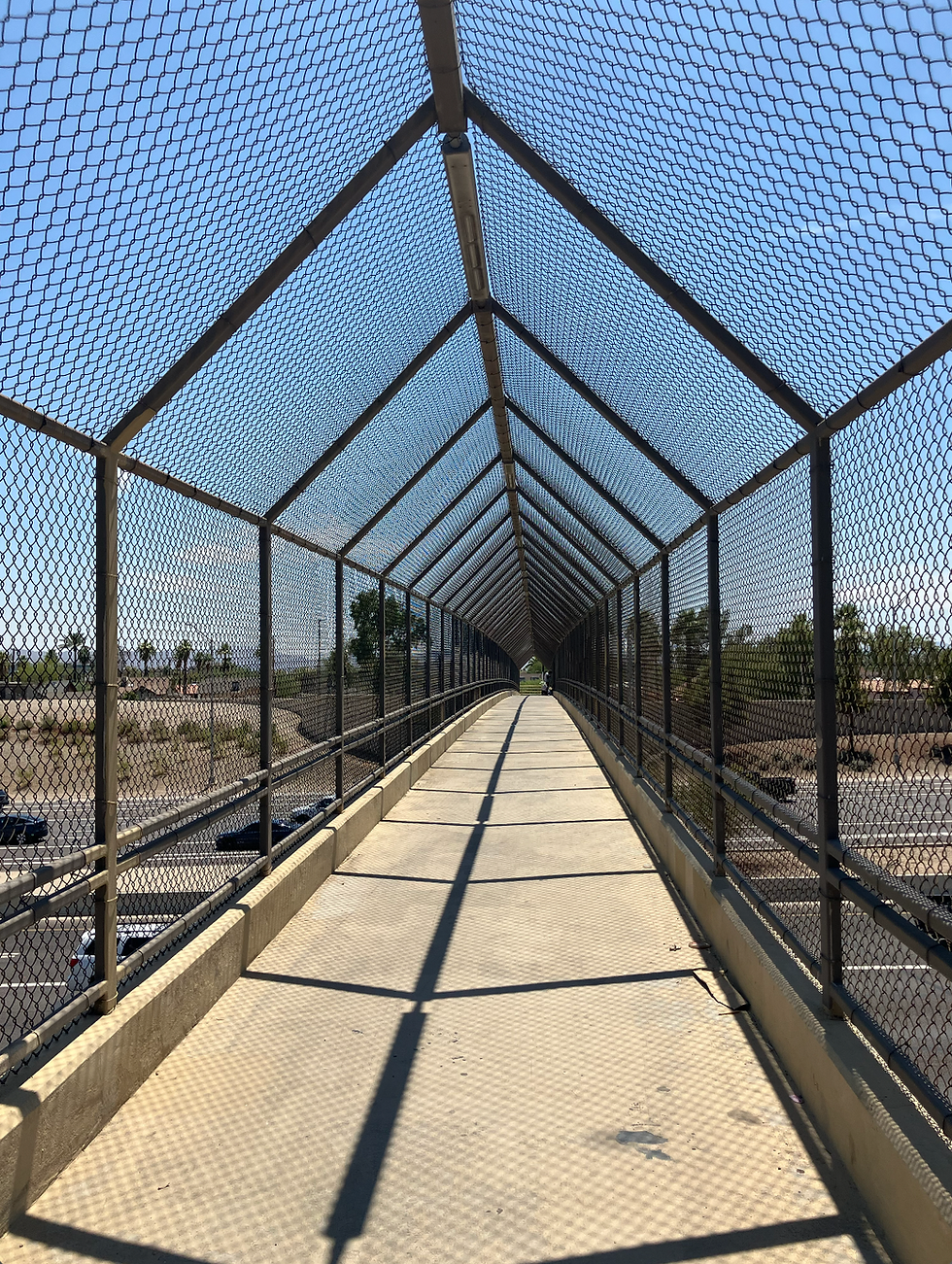
SPA worked with ADOT, the Federal Highway Administration, elected officials and other agencies on issues including freeway walls, landscaping and pedestrian access. Residents successfully pushed for a pedestrian bridge at 11th Avenue, seeing the crossing not merely as infrastructure but as a way to preserve “neighborhood cohesion” after the freeway divided Story.
The struggle continued long after I-10 opened. Story residents pressed for landscaping, noise mitigation and other improvements along the freeway corridor. Even years later, the scar remained part of the neighborhood's vocabulary.
A July 2000 Story Time matter-of-factly described Interstate 10 as the freeway that “slices through our neighborhood.”
Yet the freeway did not erase Story. The neighborhood adapted around it, creating even more cohesive connections.
Making the Case for Historic Story

Preserving Story required more than affection for old houses. The neighborhood had to document why those houses mattered.
In 1986, SPA secured $22,500 for a professional historic-resource survey, including a $15,000 grant from the State Historic Preservation Office and a $7,500 City of Phoenix match.
SPA hired Don Ryden/AIA Architects to survey the neighborhood and prepare its nomination to the National Register of Historic Places. The scale of what residents had been fighting to protect soon became clear.
By 1987, the survey had evaluated 413 structures, identifying 332 as contributing to the historic character of the district. In 1988, the F.Q. Story Historic District was listed in the National Register of Historic Places, giving formal recognition to a neighborhood whose residents had spent years arguing that its architecture and history deserved to survive.
What had once simply been an aging central Phoenix neighborhood was now officially recognized as a historic one.

A Home Tour Is Born
In November 1984, Story Time quietly announced an idea that would eventually become one of Phoenix's longest-running neighborhood traditions: “SPA has decided to organize a house tour similar to the one that the Roosevelt neighborhood ran earlier this year.”
The same newsletter explained why fundraising mattered. Printing cost money, but so did SPA's larger ambitions, including documenting the neighborhood's historic value and producing a home tour. The first F.Q. Story Home Tour was held in 1985. Contemporary newsletters confirm the timeline. The 1986 event was advertised as the Second Annual Storybook Christmas Home Tour and Arts Fair, and the 1987 tour as the third.
What began as a neighborhood fundraiser became something much larger. The Home Tour introduced thousands of people to Story's architecture, helped build pride in the neighborhood and generated money that SPA could reinvest in preservation and community improvements.
Four decades later, that tradition continues.


Fighting for Story's Future
From the beginning, preservation meant more than saving attractive houses. The young organization was simultaneously working on zoning, crime, neighborhood identity, historic preservation and the enormous disruption expected from construction of the Papago Freeway.
By September 1984, Story Time was already publishing “Freeway Facts,” warning residents that the Papago Freeway would soon become “a fact of life in our neighborhood.” SPA sought answers about how construction would affect property values, quality of life and the character of Story.
At the same time, residents were gathering signatures in support of a Special Conservation District and beginning the longer process of documenting the neighborhood's historic significance. The organization had ambition. What it did not have was much money.
A Freeway Through the Neighborhood
Plans for the Papago Freeway, now Interstate 10, placed F.Q. Story directly in its path. Homes were demolished or moved. Blocks disappeared. Eventually, the freeway corridor would cut through the neighborhood, physically separating its northern and southern portions.
For residents living here in the 1980s, the freeway was not an abstract transportation project. It raised immediate questions about property values, traffic, noise, safety and whether the neighborhood would remain a cohesive community at all.
Those concerns helped bring neighbors together.
In June 1984, residents were invited to a neighborhood meeting to discuss creating a Special Conservation District as a way of revitalizing and protecting the area. Committees were proposed to address organization, neighborhood boundaries, government relations and the community's most pressing problems.By July, a new neighborhood organization was taking shape. Residents were asked to choose its name, and the newly formed Goals, Issues & Problems Committee identified three major concerns almost immediately: security, zoning and the freeway.
On July 11, 1984, neighbors voted. The name they chose was the Story Preservation Association.
Days later, Story Time announced: “We are now officially the Story Preservation Association.” The July 19 publication was identified as Volume 1, Number 1 of the Newsletter of Story Preservation Association.
The SPA had been born.

F.Q. Story is a neighborhood that Phoenix nearly lost.
Today, its tree-lined streets, broad porches, mature landscapes and remarkable collection of early twentieth-century homes make it easy to imagine that the neighborhood was always destined to survive. It wasn't.
The story of F.Q. Story is not simply the story of old houses. It is the story of generations of residents who decided that their neighborhood was worth fighting for, then kept making that decision again and again.

From Farmland to a Phoenix Neighborhood
The F.Q. Story neighborhood takes its name from Francis Quarles Story, a Boston-born businessman whose investments stretched from California citrus to the growing communities of the Southwest. The F.Q. Story subdivision was platted in 1920, during a period of rapid expansion in Phoenix.
Over the following decades, the neighborhood developed into an unusually varied collection of homes. Bungalows stand beside Spanish Colonial Revivals, Tudors, Pueblo Revivals and other styles popular during the 1920s, 1930s and early 1940s. That architectural variety remains one of Story's defining characteristics.
But as Phoenix expanded outward after World War II, many of its older central neighborhoods faced a different future. Investment moved toward the suburbs. Older homes were altered or neglected. Demolition and redevelopment increasingly threatened buildings that had once represented Phoenix's growth and optimism.
Then came an even larger threat.
A Neighborhood Worth Saving
The Story
The Pagago Freeway Completion
The Final Mile
I-10 Papago Freeway
The 100 ft Mistake
that Changed Phoenix Forever
Preservation & Beautification
Art in Story
John Peirce
Under Construction
F.Q. Story Brochure 1920-1938


